Two parts, one small opening
The top of a chimney flue is a small square of air with a long job list. It has to let smoke out freely, keep embers in, keep rain and birds out and, while the fireplace sits cold for months, stop the air you paid to heat or cool from leaking away. Two products compete for that spot: a cap with a spark screen, and a top-sealing damper. Owners in Lakewood ask us which to buy, usually in late summer when the fire months are coming. Here is how we answer, with costs.
The cap with a spark screen
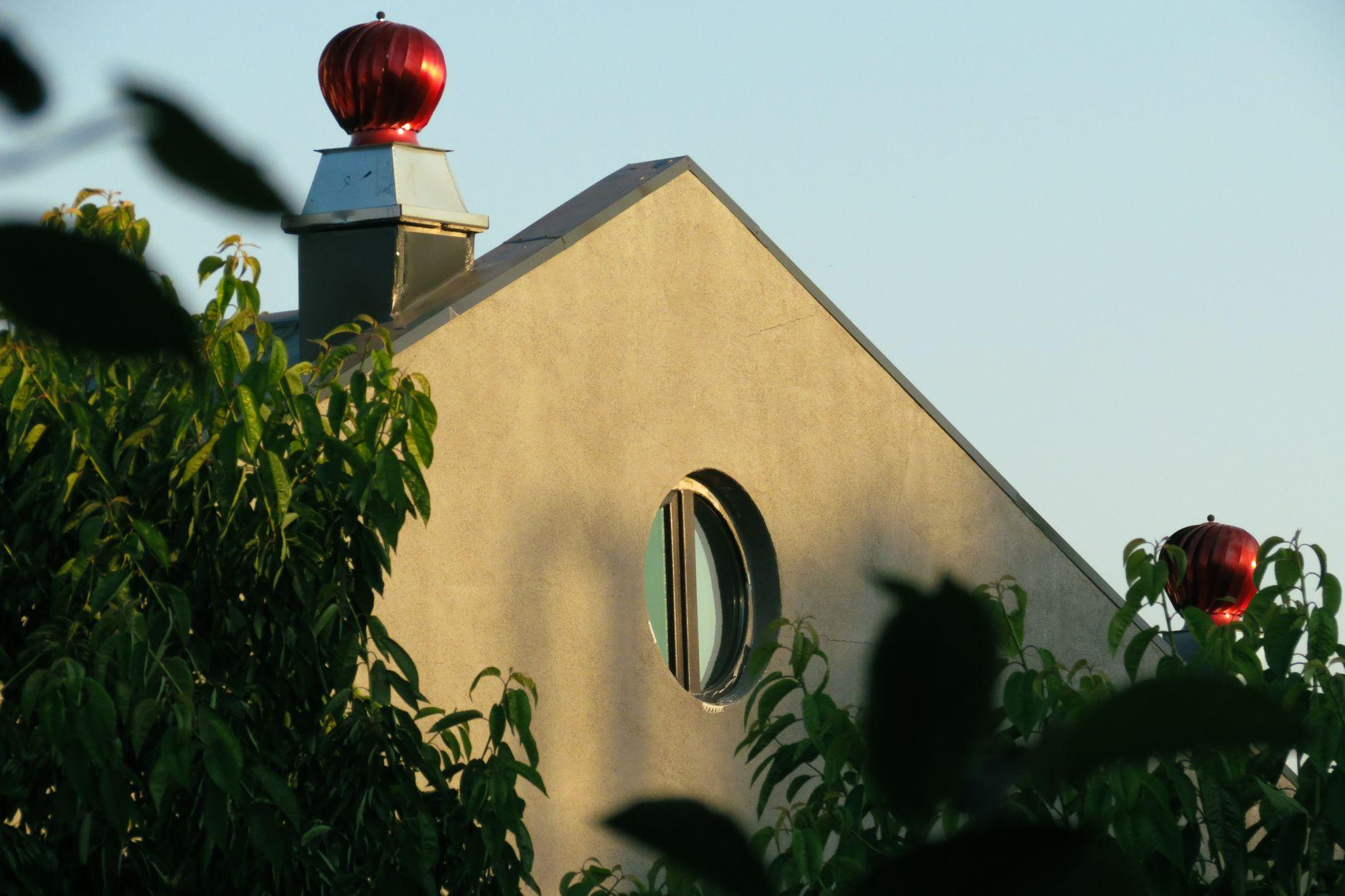
A hood held above the flue on a frame, with mesh filling the sides. Smoke passes through the mesh; embers large enough to start a roof fire do not. It is always open and has no moving parts.
- For embers: strong, as long as the mesh is intact and kept free of soot.
- For rain and animals: good. The hood sheds most rain and the mesh keeps birds and squirrels out.
- For heat loss: none. The cap does not seal anything, so the old damper down in the throat of the fireplace still has to do that job.
- Daily habit: nothing to remember.
- Price: quoted after we measure, our published range, depending on the number and size of flues and the roof.
The weak spot is what sits below it. Many older Lakewood fireplaces have a throat damper that is rusted, warped or missing its handle, so the flue stays open all summer whether you like it or not.
The top-sealing damper
A lid that sits on top of the flue and closes tight against a gasket when the fireplace is not in use. You open it from the firebox with a handle on a chain before lighting, and close it once the ashes are cold. The models we fit carry a screened housing, so when the lid is open they act as a spark arrestor too.
- For embers: as good as a cap, provided the model has a screen. Some on the market do not, and we do not put those on roofs in our area.
- For rain and animals: better than a cap while closed, since the flue is sealed.
- For heat loss: the main reason people buy one. The whole flue stays shut until you open it.
- Daily habit: it must be opened before every fire. Forget, and the room fills with smoke.
- Price: not on our published list. You get a written figure once we have measured the flue and checked the old damper.
A top damper also solves a broken throat damper without masonry work in the firebox; the old one is left open for good and the top unit takes over.
Which one fits which house
- Throat damper still works, and you mainly want ember protection: a screened cap.
- Throat damper broken or rusted, and the fireplace sits unused for long stretches: a screened top damper.
- Several flues side by side on one chimney: a custom cap covering them all. Top dampers are made for single flues.
- Factory-built metal chimney: the termination its maker lists for that model, which usually rules out both generic options.
- A wood insert or stove on a liner: a cap on the liner. The stove has its own air control, so a top damper adds nothing.
What decides the price of each
For the cap: how many flues, their shape and size, the metal, and how hard the roof is to work on. For the top damper: the flue size, the model, whether the crown is sound enough to bolt to, and whether the old throat damper has to be cleared or fixed open. A crown in poor shape affects both, and crown repair is then the first line on the quote.
When you know which way you lean, ask for a price on either option, mentioning whether the damper inside still opens and closes. We measure once and give you a written figure for both, side by side.
How each one ages near the coast
Salt air is hard on anything with a hinge. In Long Beach and Carson, and to a lesser degree in Lakewood, we look at both parts with that in mind:
- Screened caps wear at the mesh first. Stainless mesh lasts many seasons; painted or galvanized mesh can rust through in a few. Once holes appear, the cap still sheds rain but no longer stops embers, which is the part that matters here.
- Top dampers wear at the spring, the hinge and the gasket. A lid that no longer closes tight loses its main benefit. A lid that will not open is worse, because the next fire fills the room with smoke.
Both should be looked at on every yearly inspection. A rusted screen or a sticky lid caught in late summer is a small fix; the same fault found during a Santa Ana evening is a fireplace you cannot use.
What neither one replaces
A screen over a flue lined with creosote only does half the job, because the fuel for a chimney fire is still sitting there. Whichever part you choose, a sweep and a look at the flue come first. Our damper repair page covers the throat damper side, and the spark cap cost post explains what sets the cap price.
Before the windy months
Either part is far better than an open flue when the Santa Ana season starts. In Lakewood, La Palma and Long Beach we fit both, and we will tell you plainly when a plain screened cap is all your chimney needs. To settle the choice on your own roof, start from our contact page.
Put Your Chimney on the Fire Season List
Middleton Chimney Contractors works from the cap down, photographs what it finds and ranks it by fire risk. Visits run out of Lakewood to Long Beach, Carson, La Palma and the other cities on our list.